
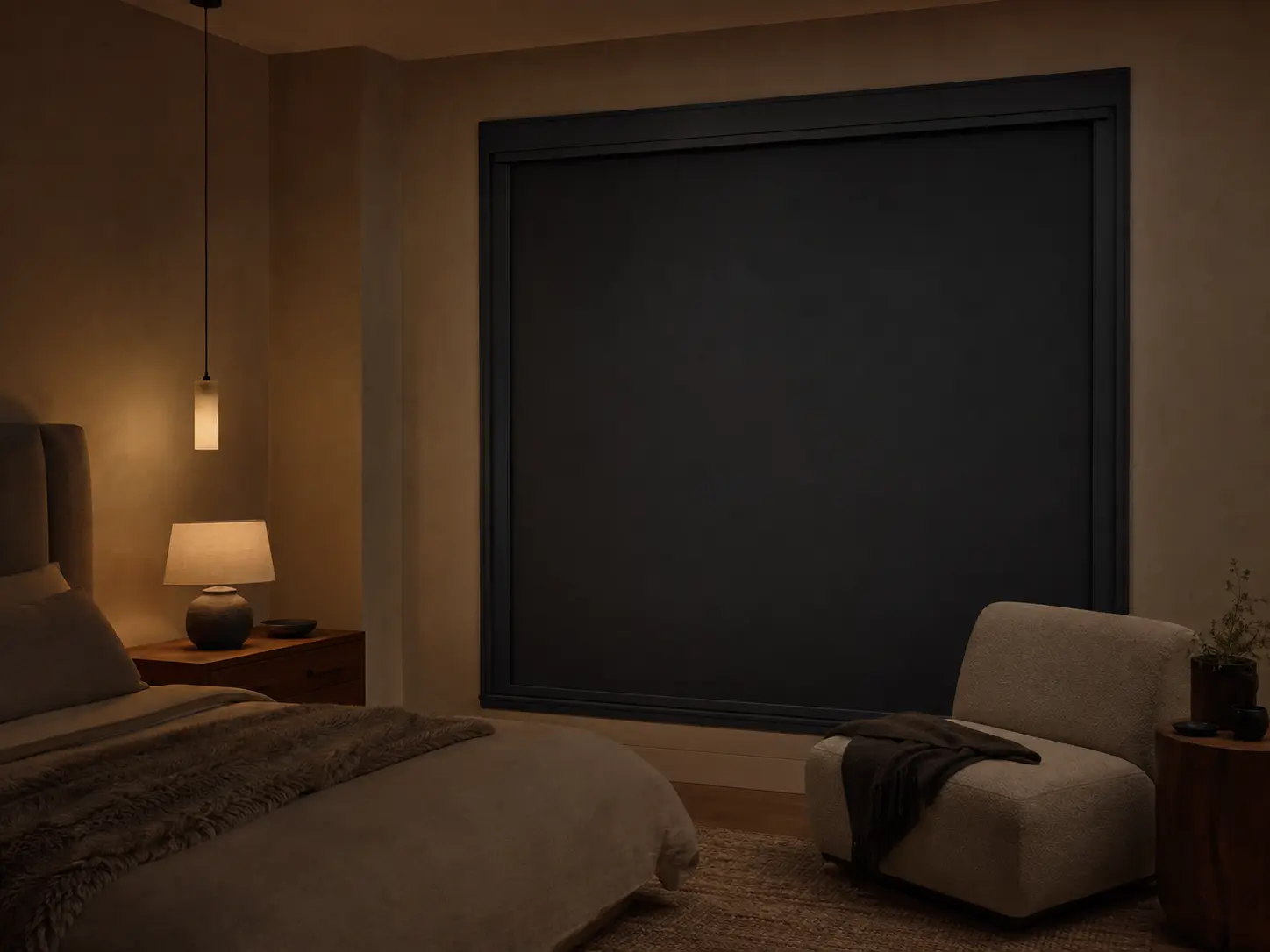
A calmer space starts with controlling the gaps
For someone sensitive to light, a narrow streak beside a shade may feel more disruptive than a softly lit room. The contrast can be especially noticeable when direct sun moves across the window or exterior lighting enters at night.
We assess the perimeter, reflective surfaces, mounting depth, and operating needs to design a more controlled environment. The aim is a room that is easier to darken quickly without making the window permanently unusable.
- Reduce sudden glare and visible light seams
- Create a predictable recovery space
- Maintain privacy and easy operation
Blackout fabric is only one part
Blackout-labeled material limits light transmission through the shade itself. It does not automatically eliminate the bright halo caused by installation clearances. A custom approach considers channels, overlap, headrail or cassette details, sill conditions, and nearby walls.
Some rooms need a single fitted system; others benefit from a layered combination. We explain where light may remain and what additional coverage would involve so expectations are clear.
Operation should feel simple
When you want darkness quickly, a complicated temporary panel is rarely ideal. A well-selected covering should close smoothly, stay aligned, and reopen without a major reset. Depending on the product ultimately offered, cordless or assisted operating options may be possible.
We also consider furniture placement, reach, window locks, and whether the opening needs frequent ventilation.
Privacy and visual calm
A properly fitted blackout covering adds daytime and nighttime privacy when closed. Neutral fabrics and restrained frames can also reduce visual clutter, helping the window recede rather than dominate the room.
Darkness preferences vary. We discuss whether you want a nearly black room, reduced glare, or flexible layering, then select the least complicated solution capable of meeting that goal.
Professional fitting in Austin
Strong Texas sun can expose every small opening around a shade. Precise measurement helps determine available mounting depth and how much coverage can be achieved without interfering with handles, screens, trim, or window movement.
Professional installation keeps the finished covering square, stable, and aligned. The final light check identifies remaining paths and confirms that the chosen system performs as planned for the room.